Neuroscience Breakthrough: Scientists Debunk 150-Year-Old Brain Theory
University of California researchers identified a brain region that forms words before they are spoken, paving the way for advanced medical technologies.
 🎓Education
Photo: UNIAN
Key points
- UCSF scientists debunked a 150-year-old speech theory.
- The role of the lpSTG region in pre-speech planning was discovered.
- The technology will help create new neural interfaces for paralyzed patients.
Modern neuroscience faces the necessity of revising classical understandings of how the human brain processes speech. A team of researchers from the University of California, San Francisco, led by Edward Chang, has made a discovery that challenges the theory of German neurologist Carl Wernicke, which has dominated for the past century and a half. It turns out that the processes of understanding and producing words in our brain are closely intertwined at the neural level.
A New Perspective on Wernicke's Area
During a scientific experiment, the researchers focused on a small sub-region known as the left posterior superior temporal gyrus (lpSTG). As it turned out, these neurons activate approximately a quarter of a second before a person voices a thought, forming a preliminary plan for the upcoming utterance. Previously, it was believed that this zone was exclusively responsible for the perception and auditory comprehension of language, while pronunciation was handled by entirely different areas of the central nervous system.
The practical significance of these findings is hard to overestimate, as they lay the foundation for developing cutting-edge medical technologies. In particular, physicians will be able to more accurately plan complex neurosurgical brain operations while minimizing the risks of damaging vital speech centers in patients.
Prospects for Brain-Computer Interfaces
The obtained data also open the path to creating fundamentally new neural interfaces capable of restoring communication abilities for individuals with severe speech impairments or paralysis. Because the identified region triggers at an early stage of word planning, it can serve as an alternative signal source for decoding information using specialized devices.
This is especially important for patients whose motor areas of the vocal tract have been damaged by illness or trauma. Successful testing of the technology on paralyzed patients brings hope that future medicine will be able to provide full two-way communication for people with profound motor disorders.
Source UNIAN — unian.ua/science/vcheni-znayshli-v-mozku-zonu-yaka-po-inshomu-vpliv… ↗
Read next
 🎭Culture & Sport
Streaming service Apple TV releases teaser for season 2 of «Presumed Innocent»
Apple TV has unveiled the first teaser trailer for the second season of the legal drama anthology series «Presumed Innocent», set to premiere in early 2027.
 👥Society
Home Care: How to Clean a Carpet Easily Using Traditional Methods
Residents of Sambir are invited to recall time-tested folk methods for maintaining home textiles without using aggressive household chemicals.
 💼Economy
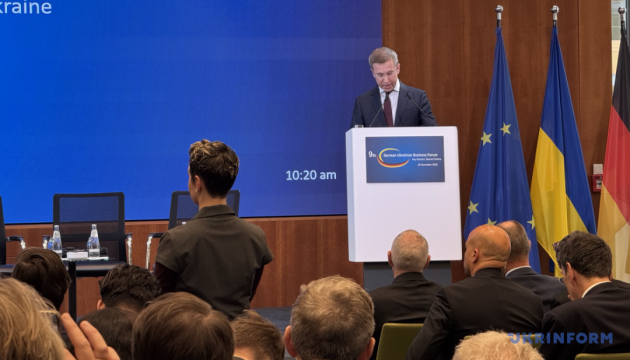
Ukraine Seeks Deeper Rail Modernization Cooperation with Deutsche Bahn
At the 9th German-Ukrainian Business Forum in Berlin, officials discussed expanding the strategic partnership between Ukrainian Railways and Deutsche Bahn to modernize in…
 💡Tech
French communes introduce unusual road signs to protect animals
Some French regions have started installing special triangular road signs featuring cats to warn drivers and reduce accidents.
Ukrainian Nuclear Power Plants Forced to Reduce Generation Following Infrastructure Attacks
Ukrainian nuclear power plants have lowered their electricity generation capacity following a massive strike on energy infrastructure. A return to standard operations wil…
 👥Society
Cultural sector of neighboring Drohobych raises over 4.3 million hryvnias for the Ukrainian military
The culture department of the Drohobych community reported significant charitable fundraising in support of the Armed Forces of Ukraine from 2022 to 2026.