Fusion Reactors in Orbit: New Horizons for Space Energy
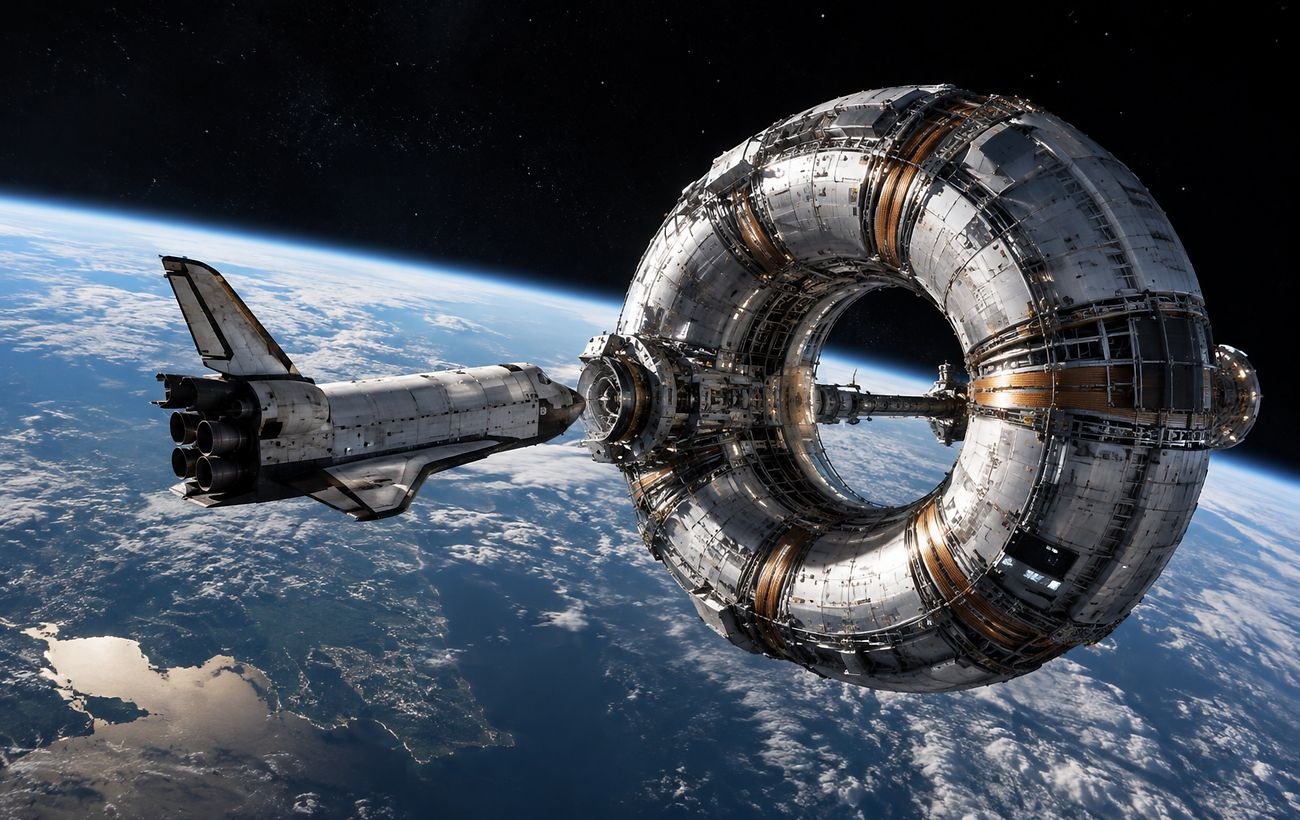
Scientists are exploring the possibility of placing fusion reactors in space to power future missions and settlements.
 💡Tech
Photo: RBC-Ukraine
Key points
- Orbital fusion reactors could replace solar panels for deep-space missions.
- Space environments facilitate tokamak operation through microgravity.
- The project targets 1 GW output to support large-scale orbital facilities.
Energy Future Beyond Earth
Researchers are proposing to move nuclear fusion beyond our planet, where creating efficient reactors faces numerous technical hurdles. According to a study published in ResearchGate, placing tokamaks in geostationary orbit could solve the power supply challenge for deep-space missions.
Physicist Yang Bae from the Spacefaring Research Institute emphasizes that the space environment offers unique advantages. Microgravity reduces mechanical stress on structures, while the lack of atmosphere allows for lighter vacuum chambers. Furthermore, the vacuum of space provides natural cooling for reactors through heat radiation.
Prospects and Challenges
Preliminary calculations suggest a 1-gigawatt reactor could power about a million homes or support large industrial facilities in orbit. An alternative approach involves using powerful lasers to trigger fusion reactions on specific targets.
While these ideas remain theoretical, they offer a safer alternative to the fission reactors that the US and China are planning to use for lunar bases. The development of this technology could become a key factor in enabling long-term human presence beyond Earth.
Source RBC-Ukraine — rbc.ua/ukr/news/termoyaderni-reaktori-hochut-vidpraviti-kosmos-1795… ↗
Read next
 🛡️Security
Russian corvette 'Mercury' damaged in Libya: suspected Ukrainian drone attack
According to the Associated Press, an explosion occurred on board a Russian warship in the port of Benghazi, which may have been caused by a naval drone strike.
 🏛️Politics
Russian Provocations in NATO Airspace: Military Expert Assessment
Retired Ukrainian Colonel Dmytro Kashchenko argues that Russian missile and drone incursions into NATO airspace are calculated tests of the Alliance's defensive response …
 🎭Culture & Sport
Ukrainian man grows a giant 350-kilogram pumpkin
A resident of the Cherkasy region grew a giant pumpkin, currently the largest in Ukraine, and decided to share it for free with the local community.
 🇺🇦Ukraine
US Director of National Intelligence: Putin is not America's friend regarding the war in Ukraine
US Director of National Intelligence Jay Clayton clarified that Trump's use of the term 'friend' for Putin was limited to nuclear safety discussions, not the war in Ukrai…
 🏙️City
Tragedy in Dymer: Death toll from Russian shelling rises to eight
Rescuers continue clearing debris in Dymer, Kyiv region, where eight people have died following an enemy attack.
 👥Society
Clashes at Kyiv Pechersk Lavra: Police investigate incident
Kyiv law enforcement intervened in a dispute at the historic Lavra complex involving disagreements over the use of religious buildings.