Signal Blocks Screenshots on iOS and Android to Prevent AI Data Scraping
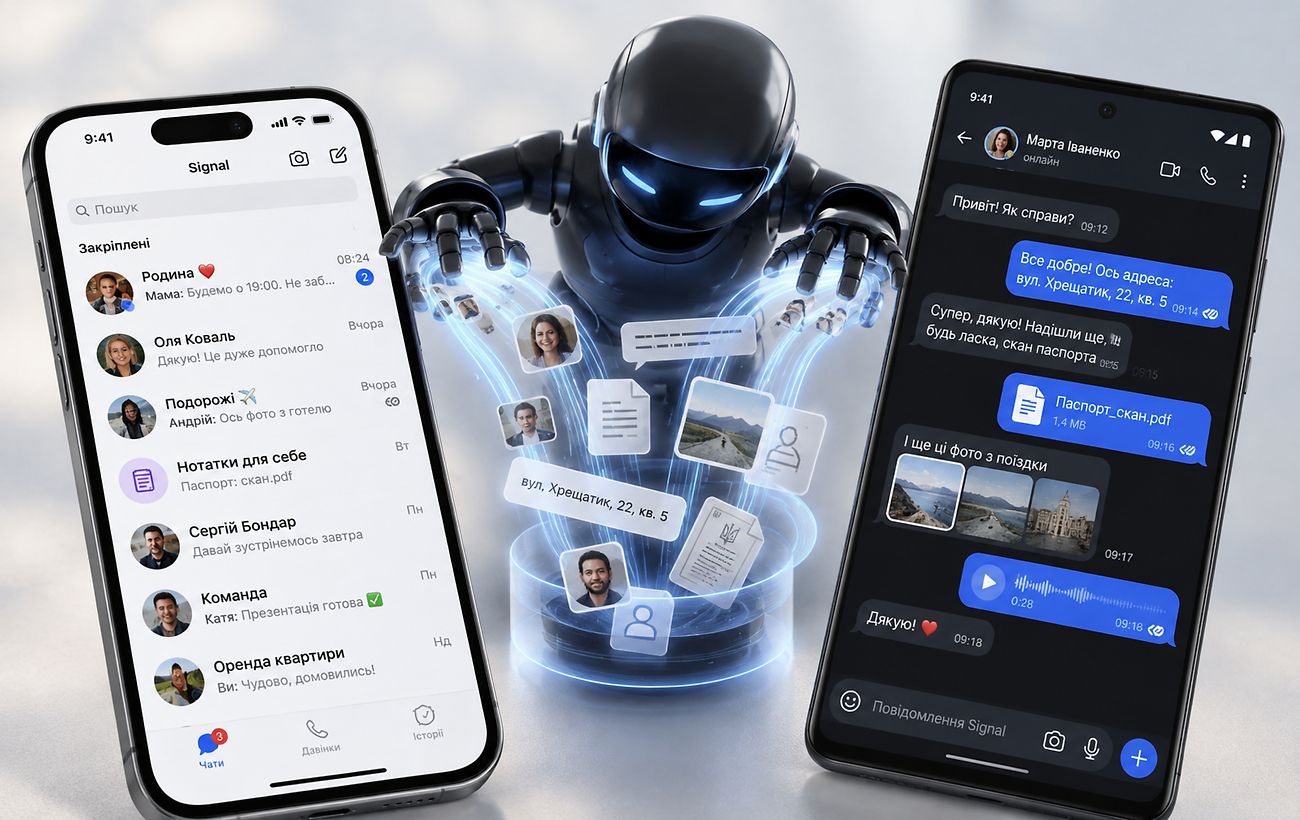
Signal is introducing new screenshot restrictions to stop operating system AI agents from capturing private chat data. Users can disable the feature in settings, though doing so compromises chat privacy.
 💡Tech
Photo: RBC-Ukraine
Key points
- Signal limits screenshots on iOS 27 and Android to block OS-level AI agents from reading chat screens.
- Integrated AI tools from Google, Apple, and Microsoft risk storing sensitive messaging data on external servers.
- Signal calls on OS creators to provide clear privacy tools and establish industry-wide standards.
Developers of the privacy-focused messaging application Signal have announced additional security measures for mobile device users. The app is restricting screenshot capabilities on iOS 27 and enabling automatic blocking on Android versions whenever an operating system AI assistant attempts to read screen content. The primary goal of the update is to prevent personal data capture by third-party algorithms.
Why Screenshot Restrictions Were Needed
Major tech companies, including Google, Apple, and Microsoft, have been deeply integrating AI capabilities directly into their operating systems. Features like Gemini Intelligence, Onscreen Awareness in Siri AI, and Windows 11 Recall constantly analyze screen content to process user tasks. As a result, sensitive messages displayed in Signal risk being copied into local databases or sent to remote AI servers.
Once chat contents leave the app, Signal can no longer guarantee the security of intercepted communications, posing privacy risks for all chat participants. While users retain the option to disable screenshot protection in the app settings, Signal warns that doing so opens messaging content to external AI agents.
Technical Limitations and Call to OS Vendors
Signal acknowledges that blocking screenshots does not solve privacy issues entirely. For instance, the measure does not prevent access to files stored locally on the device and cannot yet be implemented effectively on macOS due to OS limitations. The problem is further complicated by a lack of official technical documentation explaining how OS-level AI agents operate.
Signal's engineering team independently analyzed Android and iOS behaviors to determine how AI tools access application data. Signal is now urging Apple, Google, and Microsoft to provide clear developer tools and technical specifications, as well as to establish unified industry privacy standards to counter intrusive AI systems, including Meta Muse.
Source RBC-Ukraine — rbc.ua/ukr/news/shi-agenti-mozhut-chitati-vashi-chati-signal-179542… ↗
Read next
Russian Navy Lacks Capability to Lift Crimean Bridge Arches from Sea, Says Ukrainian Navy
The Russian Federation currently lacks the domestic technical resources to lift massive Crimean Bridge structures from the seabed. Engaging international contractors is a…
 🛡️Security
Strike on Russian Fleet in the Mediterranean: Corvette Merkury and Arms Cargo Ship Destroyed
Ukrainian naval drones hit the Russian corvette Merkury and the cargo ship MV ANGARA off the coast of Libya. The loss of the newly built warship significantly weakens Mos…
 🚌Transport
Snowfalls, icy roads, and gusty winds: forecasters warn of deteriorating weather in Ukraine
A cold spell with wet snow, wind gusts up to 20 m/s, and icy roads is expected across Ukraine over the coming days. Temperatures in the Carpathians will drop down to -10°…
Russian Fiber-Optic Drone Destroys Bread Delivery Truck in Sumy Region
In the Krasnopillia community of Sumy region, a Russian FPV drone operating via fiber-optic control struck a truck delivering bread and groceries. The vehicle burned down…
 🎓Education
Archaeological Find in France: Over 40,000 Roman Coins Uncovered Beneath Residence
Archaeologists expanding a property in Senon, France, discovered over 40,000 Roman-era coins dating back 1,700 years. The hoard belonged to prosperous gallo-roman craftsm…
 🏛️Politics
Constitutional Court of Ukraine on the Brink of Losing Quorum as Judge Count Drops to 12
The Constitutional Court of Ukraine faces severe procedural risks as its number of active judges falls to 12, leaving key chambers unable to function.